CONSERVATION NEWS
Fighting Extinction with Our Food Choices
There are very good reasons why vegan living is one of the biggest trends in the world today. It’s good for you, good for the animals & good for the planet!
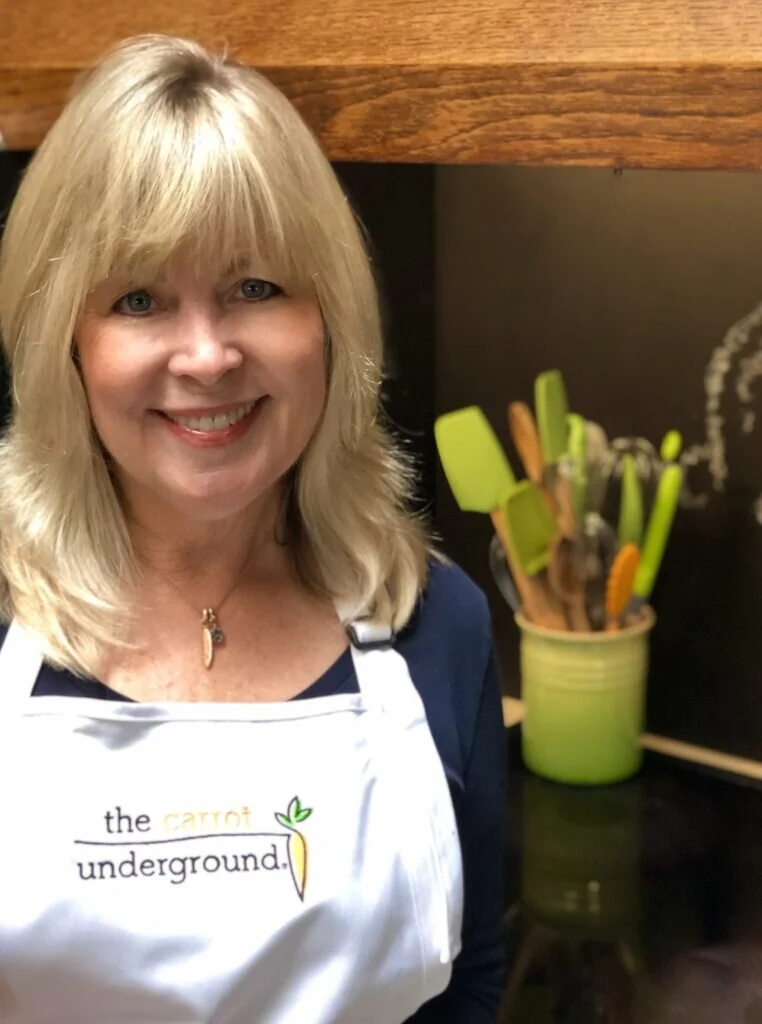
Connie Edwards-McGaughy, animal advocate and author of The Carrot Underground.
Do you know that one of the most effective things you can do to help animals and the planet is by reducing your consumption of animal products? It’s true.
As wildlife conservationists, we see the horrible toll that poaching wreaks on animals. For every elephant that is killed for its tusks or a rhino for its horn, the earth loses not only another majestic endangered creature, but the families of those animals are severely impacted as well. As the herds get smaller, their chances of survival are also reduced. Poaching isn’t the only problem contributing to the extinction of our planet’s precious wildlife. Habitat destruction is forcing animals into smaller areas of land, and as a result, decreasing the availability of their natural food sources while increasing the potential for human – animal conflict.

Around the world, deforestation is a leading cause of habitat destruction and global warming. In Zambia, thousands of hectares of primary forest are burned every year for charcoal, a common fuel source. Industrial agriculture – also known as factory farming – is a major contributor toward habitat loss, pollution, and global warming.
The practices of industrialized agriculture result in the pollution of our atmosphere, soil and waterways while increasing the potential for significant animal and human health risks. By housing massive numbers of animals in tight, unsanitary and inhumane conditions, factory farming is not only bad for the environment, it’s bad for the animals, the farm workers and ultimately, the consumers. Infectious diseases like avian and swine flu have been traced to large scale commercial operations.

Vegan Jackfruit Tuna Salad
As consumers, we have a choice. By reducing or eliminating animal products from our diets, we can positively impact the destruction caused by factory farming. Each time you choose a veggie burger over a beef burger or tofu instead of turkey, you will be helping the animals, the planet and yourself. It’s a win-win-win!
Beekeeping Update - July 2020!
Help support our Biofencing initiative, by donating today!
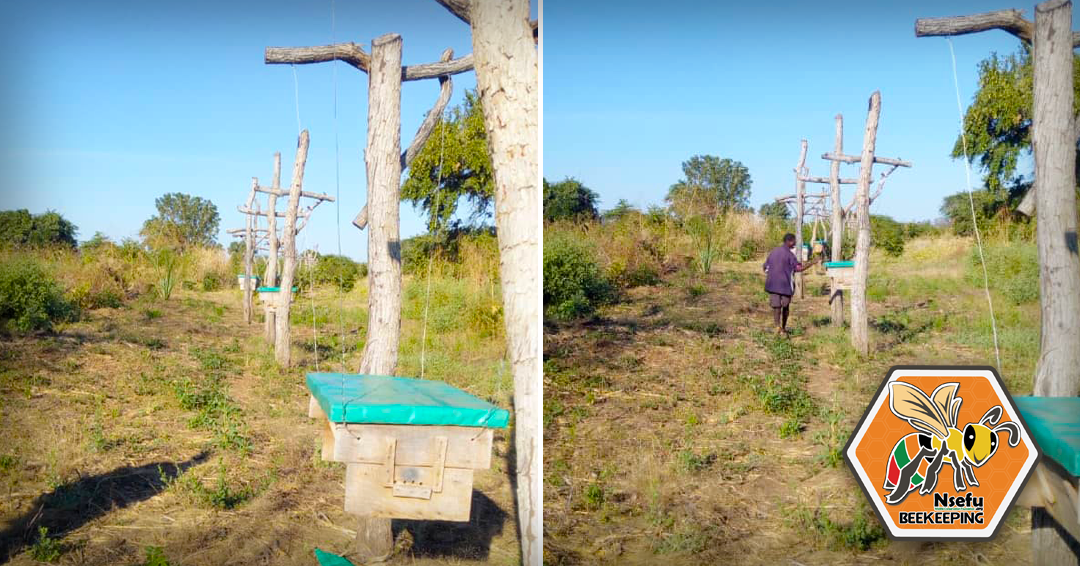
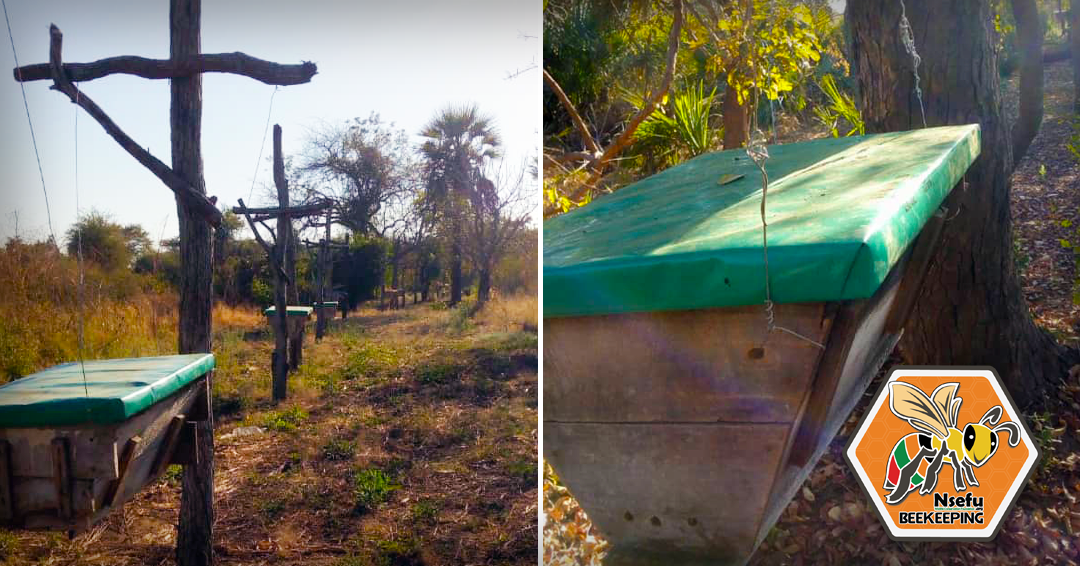
We are currently up to seven (7) occupied bee hives and as an added measure of protection from the elements, we have installed new plastic covers on each hive.
We would like to thank Mr. Chome, Ephraim and team Nsefu for all their hard work.
Your continued support will help to save and improve the lives of both the elephants and the humans within the Nsefu sector and promote a more peaceful coexistence between the two parties.
Kenya: The Maasai and the impact of COVID-19!
Let’s help the Maasai people!
LET’S HELP OUR NEIGHBORS IN KENYA win THEIR BATTLE WITH COVID-19.
During this time of the COVID-19 pandemic, people and ecosystems around the world are under stress, and the Maasai of Kenya are no exception.


The Maasai are in terrible trouble and are trying to raise money to feed their community. Nsefu Wildlife wants to aid the Maasai people in Kenya. If you can give, even just a dollar, it could help not only them but the wildlife in their area.
Crushing the Ivory Trade
Watch this interactive panel discussion on New York State's success in closing what was formally the largest domestic ivory market in the United States!

Watch our interactive panel discussion on New York State's success in closing what was formally the largest domestic ivory market in the United States. Captain Jesse Paluch talked about his team's undercover investigative work, "Operation White Gold" which led to the biggest ivory bust in New York State history and the seizure of $8 million in ivory.
Learn how you can be a force-multiplier and help report ivory items you see in store windows or online, using the "i of the Elephant" App created by Biologists without Borders, which thanks to engaged citizens has led to several successful prosecutions and ivory busts in the United States.
PANEL SPEAKERS
Captain Jesse Paluch: Chief Environmental Conservation Officer, Bureau of Environmental Crimes Division, New York State Department of Environmental Conservation (DEC). Captain Paluch has 20 years of service with the New York State DEC. He currently leads the Bureau of Environmental Crimes Investigation with 30 investigators and 10 Investigative Lieutenants under his command. "Operation White Gold" which he initiated and led from 2015-2018, resulted in the largest ivory bust in New York State history.
Sue Orloff: Founder & President of Biologists without Borders. Ms. Orloff is a wildlife biologist (M.A. California State University) with over 30 years of experience in wildlife management, endangered species studies, and monitoring wildlife populations. Sue has always had a great love of Africa and has traveled, lived, and volunteered in many African countries over the years. Sue founded Biologists without Borders in 2015 and is the creator of the "i of Elephant" app.
Wendy Hapgood (Moderator): Co-founder of Wild Tomorrow Fund. Wendy left her international career in finance to dedicate her life to the protection of global biodiversity, co-founding Wild Tomorrow Fund in 2015. She is a graduate of Columbia University's Master of Science in Sustainability Management Program at the Earth Institute, and the Master of International Relations (Political Science) at The University of Queensland, Australia.
Sara Walker: Senior Advisor on Wildlife Trafficking, AZA. Sara has led the Wildlife Trafficking Alliance (WTA) since 2015, which joined forces in 2018 with the Association of Zoos & Aquariums in a united effort to fight the global epidemic of wildlife trafficking. The WTA coordinates efforts to raise public awareness about scope of the wildlife trafficking crisis, effect behavior change to reduce consumer demand for wildlife and wildlife products, while working to mobilize companies to adopt best practices in the fight against wildlife trafficking. Sara has an MA in International Relations from the University of San Diego and a BA in International Studies from the University of Oregon.
Food for Guns
Let’s hope we can continue to remove guns from the field.


Nsefu Wildlife has recently started offering food for guns, which will help to end poaching. We’ve gotten our first three guns with this program.
Due to the economic impact of COVID on the tourism industry, countless jobs have been lost in Zambia leading to escalating poaching for survival. Nsefu Wildlife tackles the crisis of poaching from all angles, even during a pandemic.
You’re donations make this new program and our other continuing program possible.