CONSERVATION NEWS
KAZA adopts Botswana’s scientific management plan for transfrontier area
Bloc adopts scientific wildlife management system .
12 APR, 2019
Story by: Leonard Ncube, Victoria Falls ReportER /somervillesustainableconservation

Minister Priscah Mupfumira
KAVANGO-ZAMBEZI Trans-Frontier Conservation Area (KAZA-TFCA) countries have resolved to adopt a scientific wildlife management system in national parks, a development which will enable the bloc to harvest or move wildlife without hindrance.
The decision was made at the close of the Joint Management Committee and Committee of Senior Officials meeting in Victoria Falls yesterday.
It comes on the backdrop of a ban on hunting of specific animals such as elephants and sale of ivory, which the KAZA-TFCA bloc feels is unfair.
The KAZA-TFCA has arguably the biggest wildlife population especially for elephants in Africa but cannot cull or freely move them because of restrictions imposed under the Convention on International Trade in Endangered Species of Wild Fauna and Flora (CITES).
This has escalated human-wildlife conflict thereby causing death of humans and illegal hunting as communities feel they are not benefiting from the natural resources.
KAZA-TFCA member states namely Angola, Botswana, Namibia, Zambia and Zimbabwe wanted a common position on the matter ahead of the Conference of the Parties (CoP18) next month in Colombo, Sri Lanka.
They feel scientific management of wildlife will minimise human-wildlife conflict as communities will start benefiting.
The position will be ratified by Heads of State at the KAZA-TFCA Heads of State Elephant Summit set for May 7 in Kasane, Botswana.
The KAZA Bloc resuscitated the Ministerial Committee after the return of Botswana that had not been cooperating with the other four countries in the last few years.
Botswana, which has the largest population of elephants in KAZA with 150 000 jumbos, prepared the position paper and the other four member states adopted it as a KAZA statement.
“We note with concern debate and criticism on elephant population. KAZA-TFCA is a conservation and development partnership of the five governments and the key objective is to join fragmented wildlife heritage into interconnected areas and wildlife corridors with free movement of wildlife.
“It’s imperative that any programme that promotes conservation must sustain livelihoods of rural communities. We therefore call upon critics on elephant management to stop and allow the Republic of Botswana and KAZA-TFCA in general to implement policies and programmes on elephant management in a systematic management to improve species management and community livelihoods.
“We further call upon the critics to provide support to sound elephant management practices in particular problems such as human wildlife conflict,” read the statement by Botswana.
Botswana Minister of Environment, Natural Resource Conservation and Tourism, Onkokame Kitso Mokaila, assumed KAZA chairmanship for the next two years.
Environment, Tourism and Hospitality Industry Minister Prisca Mupfumira who co-chaired the meeting with her Botswana counterpart said while Botswana prepared the statement, it should be adopted as a KAZA position.
“As Zimbabwe we also support the statement and scientific management of wildlife. We think that we should support KAZA as a grouping and that statement should be a KAZA statement because we all believe in the same. What we have all said makes it a KAZA statement so that it’s not looked at as a Botswana position,” she said.
Zambia Tourism and Arts Minister Charles Banda said scientific management of animals is the only remedy to human-wildlife conflict.
“I want to believe that the critics have disadvantaged us the people who own this wildlife by way of curtailing us from the use of the same natural resources. We’ve been told that we should not hunt elephants or sell ivory but if you look at what is happening today elephant numbers are growing exponentially causing a threat to human population.
“The only way out is to adopt systematic and scientific control of these ever-growing numbers for purposes of reducing on human wildlife conflict and also raising finances for conservation and developing the livelihoods of the people that live within and around areas where these animals live,” he said.
Namibia Minister of Environment and Tourism Bernadette Maria Jagger said scientific management is one of the best approaches to manage thousands of elephants and for communities to benefit.
“Wildlife should contribute to wildlife management hence as Namibia we fully support new policies and programmes of elephant population management of Botswana to minimise human wildlife conflict. People should be allowed to go into trophy hunting and sell locally and internationally and as KAZA we should support one another when we go out,” she said.
The meeting started on Monday and ended yesterday. — @ncubeleon
Zambian villagers cleared to sue copper mine in London!
Zambian villagers fight back.

Some 2,000 villagers in Zambia were Wednesday granted permission by the British Supreme Court to sue in Britain over pollution by Konkola Copper Mines (KCM), a unit of London-listed Vedanta Resources, their representatives said.
The villagers filed a claim in London in 2015 against KCM, Zambia's largest mining company and its London-based parent company, for toxic pollution caused by water discharged from its unit Nchanga Copper Mines, situated in the central copperbelt region.
They claimed to have suffered health problems and loss of income through damage to the land KCM and Vedanta then challenged the decision by the Zambian villagers to sue in Britain and the jurisdiction of the English courts to hear their complaint.
The appeal was heard in January this year and on Wednesday the Supreme Court ruled that the claim by the villagers could be heard in London.
"It seems to me that the parent (company) may incur the relevant responsibility to third parties if, in published materials, it holds itself out as exercising that degree of supervision and control of its subsidiaries," read the judgement.
"In such circumstances its very omission may constitute the abdication of a responsibility which it has publicly undertaken."
With Wednesday's verdict, claimants from the village, near the border with the Democratic Republic of Congo, can now be heard in the London High Court.
"This is a very perfect judgement because multinational companies in Africa manipulate everyone starting from the government to the courts," said Robert Chimambo, a Zambian independent environment campaigner.
"They are very powerful here and we can only be assured of a fair judgement in their countries of origin. We need more of such judgements," Chimambo told AFP.
os/sn/ri
VEDANTA RESOURCES
Botswana’s Plan To Cull Elephants And Sell Them As PET FOOD Wins Ministerial Approval
We need to fight to save elephants and rhino lives.
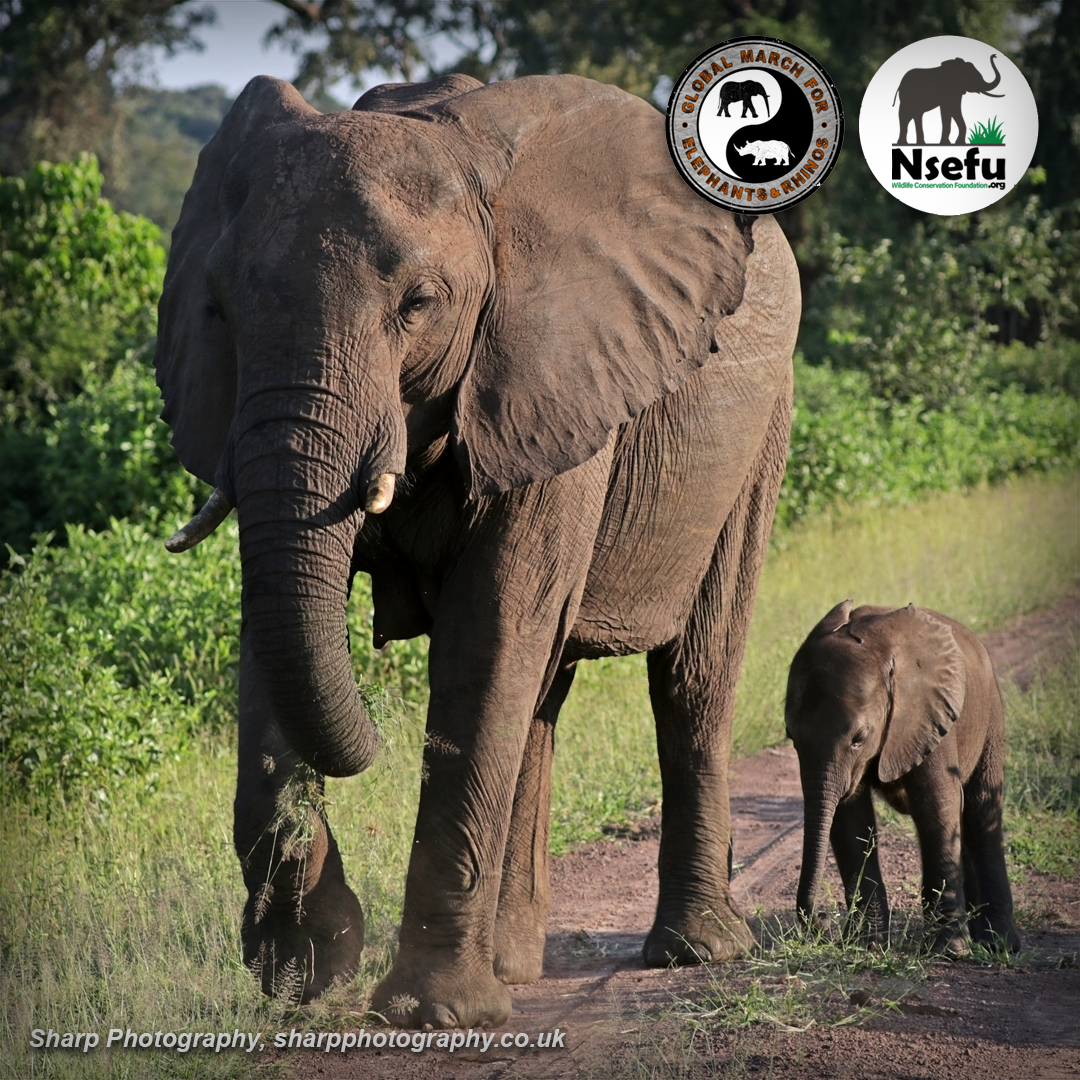
Botswana is moving towards culling elephants by lifting its wildlife hunting ban after a group of the country’s ministers endorsed the idea, but the proposal has drawn heavy criticism. Botswana’ is planning to cull elephants and sell them as pet food wins ministerial approval.
The southern African country’s President Mokgweetsi Masisi had previously tasked a government subcommittee with reviewing the hunting ban – which had been put in place by his predecessor Ian Khama in 2014.
The committee decided to recommend lifting the ban last Thursday, and the country’s minister of local government and rural development Frans Solomon van der Westhuizen advocated ‘regular but limited elephant culling’, NPR reports. Story by Door Webmaster / greenworldwarriors.com.
If you are as upset by this as we are, join Nsefu.org for the
Global March for Elephants and Rhinos.
We are participating in three separate marches, one in San Diego, Honolulu and Zambia.
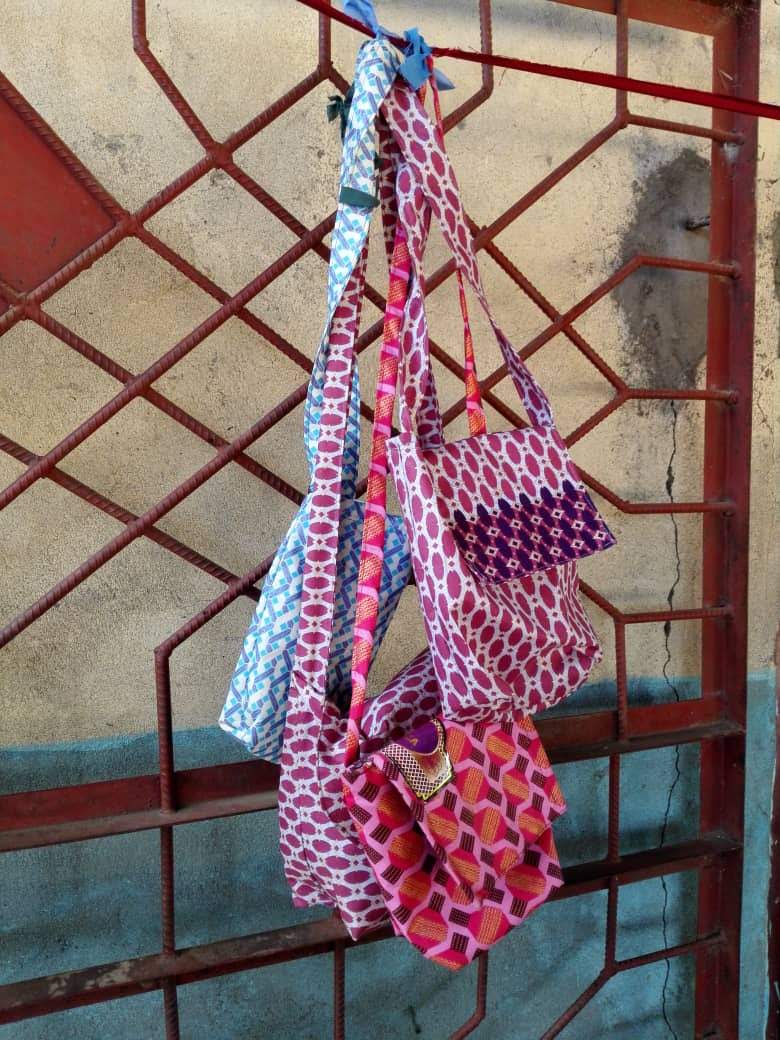
Nsefu Wildlife Sewing Program is becoming a success!
Your support makes Nsefu.org programs possible.
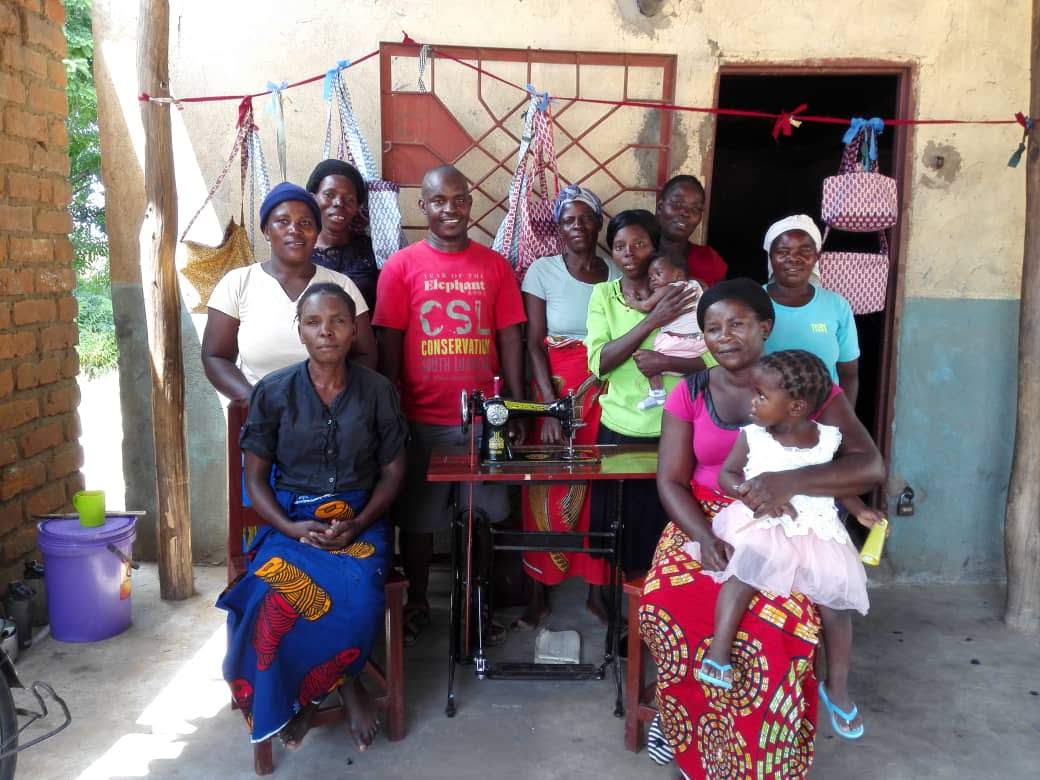
The Nsefu Wildlife Conservation Foundation Sewing Project is progressing well, with the team producing more bags and other items for purchase.
Find out more about our Sewing Program.

Urge our CITES delegates to VOTE at CoP18 for maximum protections for Endangered Species
Nsefu.org has partnered with the Global March for Elephants and Rhinos to urge CITES delegates to vote for maximum protections for wildlife.

One of the key asks for GMFER2019 will be to urge our CITES delegates to vote at CoP18 for maximum protections for endangered species (vote for all uplist proposals), and to reject proposals to reopen ivory trade in southern African countries, trophy hunt elephants and down list endangered species. We suggest event organizers include these calls to primary CITES representatives as a key ask of their event this year, as well as calling for a ban on the import of hunting trophies of endangered species.
Kitty Block, president of Humane Society International, said:
"Every single day, human-induced habitat loss, poaching, commercial trade and climate change are pushing more of our planet's precious wild species towards extinction. We can no longer afford any complacency when it comes to saving wild animal species threatened by over-exploitation, and so as we welcome CITES proposals to establish new or increased protections, we urge nations to ensure that species conservation is approached as a necessity not a luxury, with pro-active trade restrictions imposed long before a species is at the extinction precipice.
With ivory traffickers exploiting the long-extinct mammoth so that they can further exploit imperilled elephants, the time is now for African and all other nations to unite in the fight to end the poaching epidemic and ensure all ivory markets are closed. Giraffes too need our urgent attention, having already disappeared from seven countries and now quietly slipping into extinction with the wild population at or just under 100,000. The time to act is now, before we lose them forever.”