CONSERVATION NEWS
Tell the Botswana government to say NO to lifting the ban on trophy hunting
Help stop the lifting of the Trophy Ban in Botswana!

In 2014, Botswana made a historic move by banning trophy hunting. Now the country is considering reversing the trophy hunting ban by creating laws to help trophy hunting grow throughout the country. Botswana is also considering instituting regular elephant culling in a misguided attempt to manage their elephant populations and to use the elephant meat as pet food. This backwards thinking will threaten the country’s imperiled species, such as elephants, rhinos and leopards, who are struggling to survive intense pressures from poaching, habitat loss and human-wildlife conflict.
Chinese 'Queen of Ivory' jailed for 15 years in Tanzania!
Finally justice for selling poached ivory!

Yang Feng Glan, known as the 'Queen of Ivory,' pictured in a Tanzanian court . Photo: CNN
(CNN)A Chinese woman, nicknamed the 'Queen of Ivory' and thought to be one of Africa's most notorious traffickers, has been sentenced to 15 years in prison, Tanzanian authorities told CNN.
On Tuesday, a Tanzanian court found Yang Feng Glan, 70, guilty of smuggling 860 elephant tusks that authorities say are worth $6.45 million.
Yang Feng Glan, was sentenced along with her Tanzanian co-accused Salivius Francis Matembo and Manase Julius Philemon.
They were also sentenced to an additional two years in prison under Tanzania's Wildlife Protection Act, which they can convert into a fine amounting to twice the value of the ivory they are charged with smuggling. Authorities put this value at $12.9 million dollars.
Thank you Jan Honza Bebr & Parklane International School!
We’re grateful to Jan Honza Bebr & Parklane International School for their support.
Nsefu.org would like to thank Jan Honza Bebr & the Parklane International Schools for their support of our conservation efforts in Zambia.
400,000 African Pangolins are hunted for meat every year – why it’s time to act
Find out more about the Africa’s Pangolins plight.
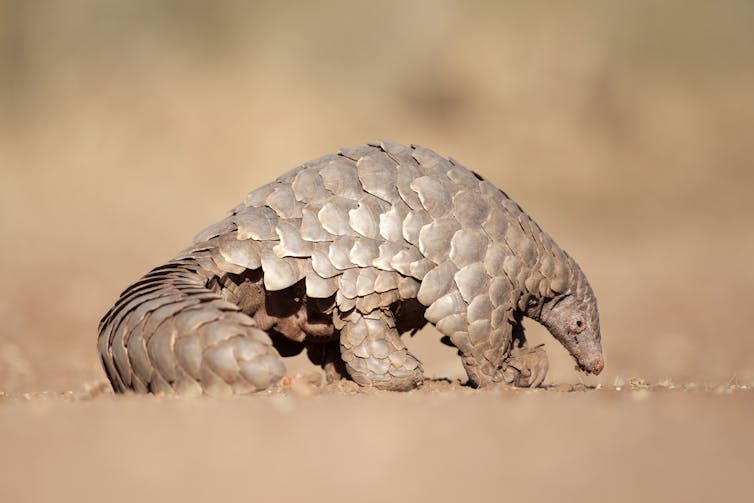
Pangolins, a group of unique African and Asian scaly mammals, are considered to be one of the most heavily trafficked wild mammals in the world. They are hunted and traded for their meat, scales, and other body parts, and used as traditional medicines in parts of Africa and Asia.
Of the eight pangolin species, four are found in Africa. These are the white‐bellied, black‐bellied, giant, and Temminck’s ground pangolin. Three of these species live in Central African forests. The tree-dwelling white-bellied and black-bellied pangolins, weighing approximately 1.5 to 3kg (comparable to a small rabbit), and the ground-dwelling giant pangolin can weigh up to 33kg (the weight of a small Labrador dog).
But little is known about population sizes, mortality rates, and reproductive potential of African pangolins. Mounting evidence suggests that as the availability of Asian pangolins declines, and international trade flows increase, traders increasingly supply the more abundant and less expensive African pangolins to meet demand.
Seizures of pangolins and their scales and skins from Africa, destined for Asia, are increasing with over 53 tons seized in 2013 alone. These estimates likely represent a fraction of all pangolins traded, and an even smaller portion of the number of pangolins hunted.
To better understand how many pangolins are hunted in Central Africa each year, I and a team of researchers collated information on the quantities of animals that hunting villages extract from the forest, from studies conducted over the last 20 years. By doing this we can provide crucial information on regional trends which can be used to inform conservation actions and policy.
What we found
We looked into the number of animals hunted in villages and offered for sale by collating data from research and reports that covered over 100 areas in sub-Saharan Africa between 1975 and 2014.
We extracted information on whether the animal was eaten or sold, how they were hunted, the sex, age category, and price. Other species typically hunted for meat include blue duikers, brush-tailed porcupines and greater cane rats.
For Central African forests in Cameroon, Central African Republic, Equatorial Guinea, Gabon, Democratic Republic of Congo and Republic of Congo, we estimated that at least 400,000 pangolins are hunted annually for meat.
But we don’t yet know whether pangolins can withstand these levels of hunting. This is mainly because we don’t yet have reliable pangolin population estimates for any of the species that inhabit Central African forests. Ideally, we would also need population and hunting data in the same location to be able to understand the levels of hunting that lead to population declines.
Pressures
The pressures on African pangolins are likely increasing for several reasons.
Firstly, increasing deforestation across West and Central African countries has reduced their habitat, particularly for the semi-arboreal white-bellied pangolin and the arboreal black-bellied pangolin, which rely on forest habitats.
As the human populations grow in West, Eastern and Central Africa, this may exacerbate trends in deforestation and wildlife consumption.
Secondly, increases in the accessibility of remote areas to people and extractive industries may lead to more pangolin hunting. For example, a recent study showed that Asian industry workers in Gabon requested pangolins from hunters more than any other species.
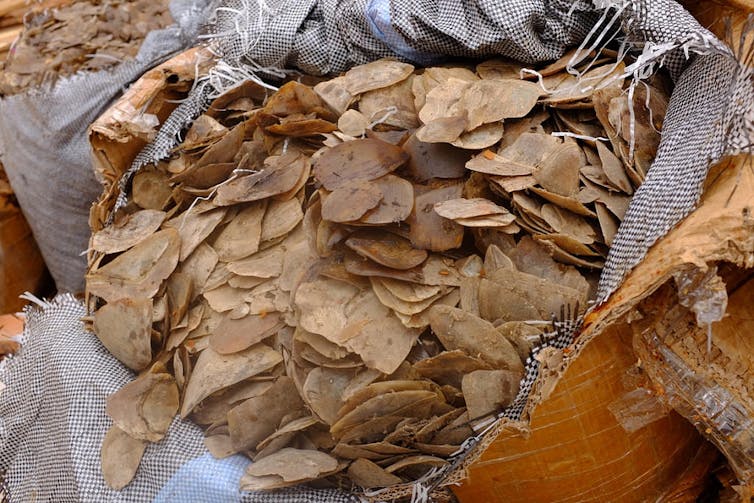
Finally, the international trafficking of pangolins over the past decade has boomed. They are one of the most trafficked wild mammals in the world. For example, eight tonnes of pangolin scales trafficked from Nigeria, one of the largest ever hauls of scales, was intercepted a couple of weeks ago in Hong Kong.
Time to act
While the media has greatly increased its coverage of the plight of pangolins in recent years, financial and political support for conservation is still greatly needed. This includes support for pangolin population monitoring, identification of pangolin strongholds and areas in need of conservation, and the identification, design and testing of conservation interventions, where needed.
Without these steps we may see the African pangolins follow in the footsteps of their Asian counterparts.
Daniel J Ingram, Researcher in Conservation, UCL
This article is republished from The Conversation under a Creative Commons license. Read the original article.
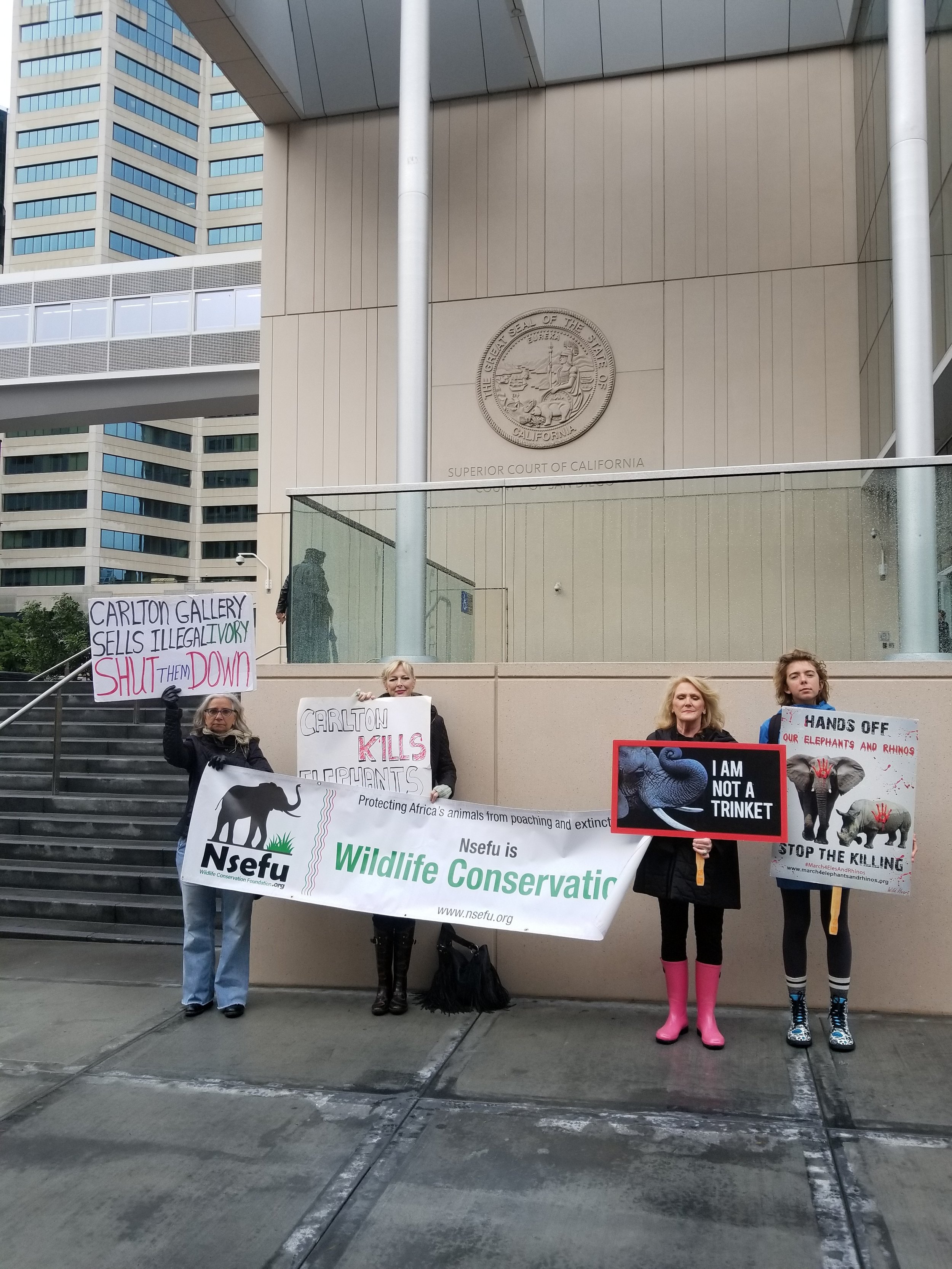
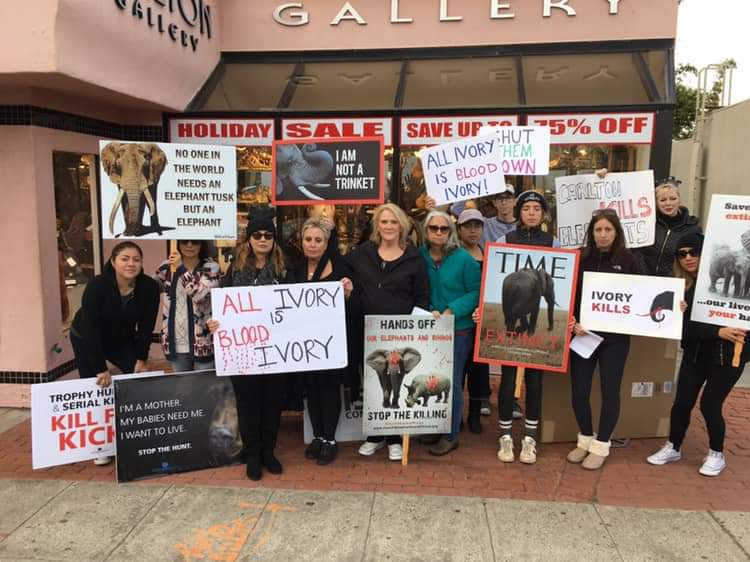
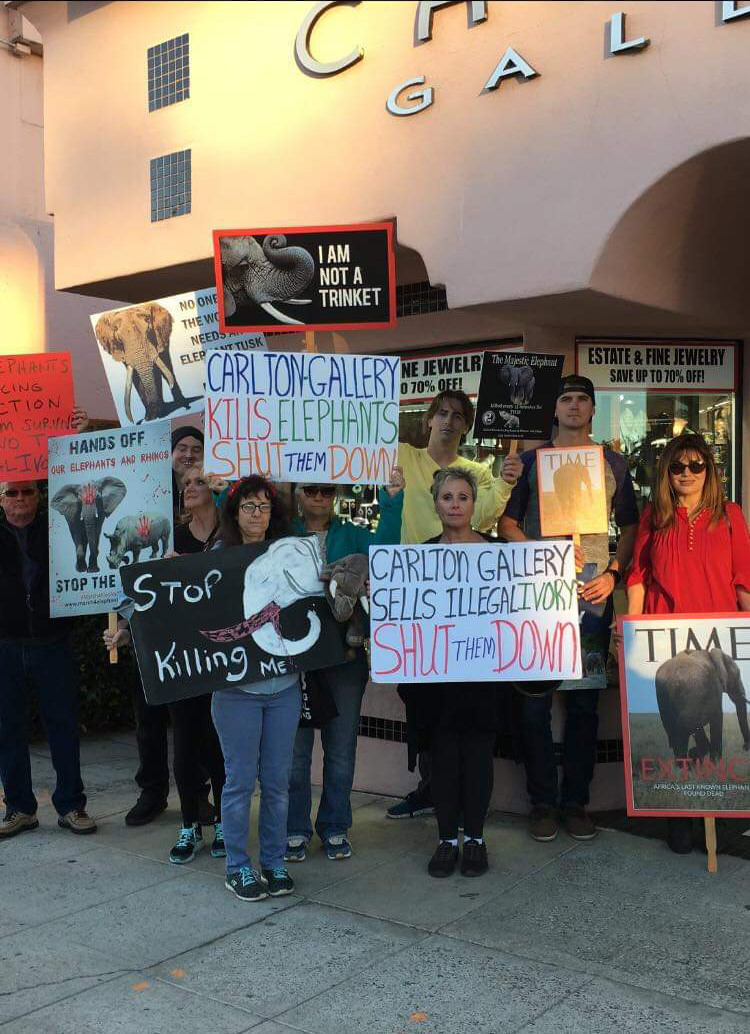
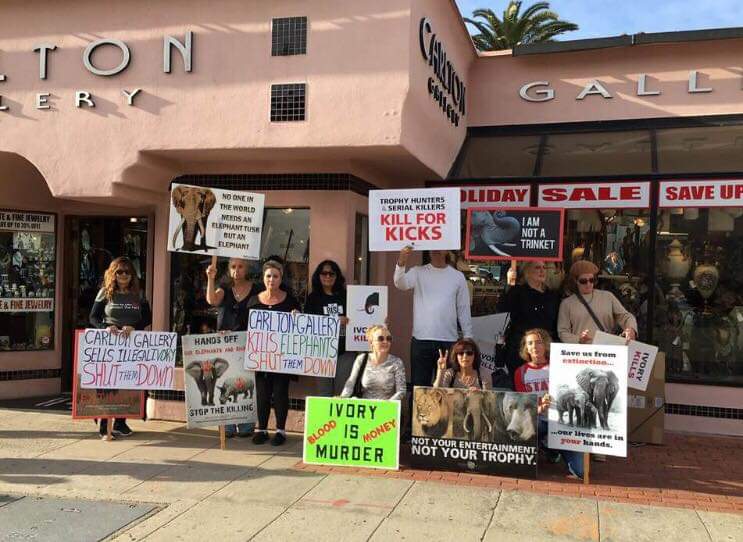
La Jolla gallery owner, employee convicted in ivory trafficking case!
Although it wasn’t the verdict we wanted, it’s a first step in protecting wildlife!

SAN DIEGO (CNS) - The Carlton Gallery in La Jolla, its owner and an employee were ordered to pay a total of $210,000 in fines for trafficking $1.3 million in illegal ivory, San Diego City Attorney Mara Elliott announced Tuesday.
Gallery owner Victor Hyman Cohen was convicted of 11 counts of ivory trafficking while salesman Sheldon Miles Kupersmith was convicted of eight counts. The gallery and Cohen were ordered to pay $75,000 each in fines, while Kupersmith must pay $60,000 in fines, according to Elliott's office, which said the fines are the largest for ivory trafficking in state history.