
CONSERVATION NEWS
The value of Zambia’s wild yam. Why it matters!
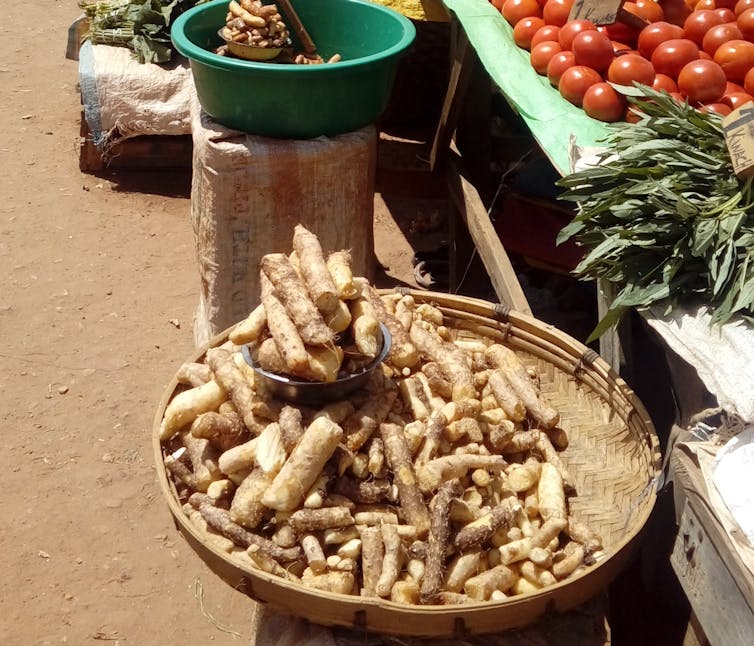
Lusala a local wild yam in Zambia that supplements diets has seen a considerable rise in demand.
Wild harvested crops are a vital source of food in much of the world. Some common wild edible plants in southern Africa include wild mushrooms, such as Termitomyces titanicus, orchids from the genera Disa, Habenaria and Satyrium, and various wild vegetables such as wild spinach (an amaranth), and Cleome species.
The well-known adage “you can’t manage what you can’t measure” is relevant here. If foraging is not quantified then its economic and social value may be ignored by decision makers in a world where major decisions are often driven by quantitative data.
One such unrecorded estimate of the value of foraging has now been provided in southern Zambia.
The tubers of the wild plant lusala are sold in markets. Lusala, the Tonga name for the wild yam Dioscorea hirtiflora Benth, is a tuberous, climbing wild plant that’s indigenous to Zambia and grows in the country’s forests. To answer the question “is this wild edible plant important?”, we surveyed the plant’s role in the lives of 278 rural households across four different districts in the southern province of Zambia and in market traders’ businesses in three towns.
We were astonished at the dependence on this wild yam. Almost all (96%) rural households ate lusala. A high portion collected tubers from forests (83%) while over half (59%) sold tubers they collected. There were no differences among districts.
This new understanding of the level of lusala use means that it’s possible to place a value on it, and to begin to understand how important forests in the region are to maintaining supply. Forests in Zambia are under threat, with deforestation happening at an alarming rate.
Many of those interviewed recognised that lusala foraging from the forests is at risk. Lusala populations were reportedly declining with “hotspots” taking longer to find, and tubers taking longer to collect. Causes cited include: overharvesting (population growth is increasing the number of foragers), declining rainfall, forest clearance for homesteads, crop production, or charcoal production, or wild pigs eating tubers.
What we found
Tuber collection was a dry-season activity, almost entirely by women and girls, when crop production activities were limited. The time taken to walk to the “hotspots” where lusala could be found varied considerably among districts, from around 30 minutes to over two hours. Collecting 1kg of tubers took from under 20 to over 40 minutes at these sites, with collecting trips every 4-6 days in April (the peak month).
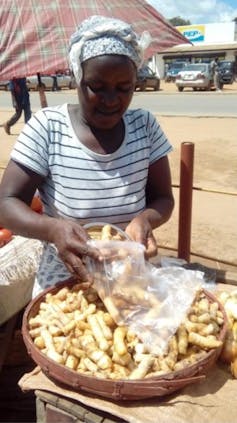
In that month, each household collected an average of 28kg of tubers, of which some 12 kg was consumed in the same month and the rest bartered or sold.
Lusala is a local, seasonal delicacy that supplements diets: it’s considered tasty, blends well with groundnuts, eggs, fish and meat in meals. It is in considerable demand from urban populations also.
Market traders confirmed this. On average, each sold over 800kg of tubers in the month surveyed. Moreover, they were sourcing lusala from as far as 250–320km away to meet demand from urban populations.
There’s a strong socio-economic argument for the protection of native forests when the value of wild-harvested lusala is recognised.
Forests under threat
Forests are of vital importance, ecologically, aesthetically, and economically as sources of timber, fuel wood, food, fibre, medicines, to name a few. Forests are particularly important to people in rural areas who forage diverse natural products, including non-timber forest products. This is vital in alleviating poverty; yet the global forest area continues to decline.
The majority of Zambia’s population of over 16 million is rural, including in the Southern Province, and rural poverty is high. Deforestation in Zambia is also high, with between with 79,000 to 150,000 hectares of forest destroyed each year. Charcoal production, fuel wood collection, conversion to farmland and urbanisation are among the contributory factors.
Some good news
Identifying this previously unrecognised contribution to the quality of life of several million people in central, southern, and western Zambia is only a first step. This wild edible plant and its habitat now need to be protected in a way that enables sustainable foraging by local people to continue.
The good news is that elders in the communities in which we did our research all have considerable knowledge of the plant and of sustainable foraging, vital assets for sustainable development. Their knowledge needs to be harnessed to protect lusala, as well as the forests it grows in. Alternative ways of sustaining the plant should also be considered, such as multiplying tubers in nurseries and reintroducing in depleted areas.
Richard Ellis, Professor of Crop Production, University of Reading; Alastair Culham, Associate Professor of Botany, University of Reading, and Donald Zulu, PhD candidate, University of Reading
This article is republished from The Conversation under a Creative Commons license. Read the original article.
Global wildlife regulator to consider relaxing ivory trade bans, prompting fears of huge rise in elephant poaching
Conservationists alarmed as Botswana, Namibia, Zambia and Zimbabwe seek permission to sell off stockpiles!
Story by Jane Dalton / www.independent.co.uk
The international body responsible for protecting endangered animals is to consider relaxing restrictions on the ivory trade, prompting fears such a move could trigger a huge rise in elephant poaching.

© Provided by Independent Digital News & Media Limited
Wildlife experts warned against any loosening of the rules as several African countries pushed to end a near-global ban on sales of the material extracted from tusks.
Botswana, Namibia and Zimbabwe are all demanding they be allowed to sell off stockpiles of raw ivory on their home soil as well as from South Africa.
Zambia, meanwhile, is pressing to have the status of its elephants downgraded to a category “not necessarily threatened with extinction”, allowing its ivory to be legally sold.
Leaders of the four countries have put their controversial proposals to the next meeting of the Convention on International Trade in Endangered Species (Cites), to be held in Sri Lankan capital Colombo in May.
African elephant numbers have plummeted in recent decades, largely because of widespread poaching for ivory, which is illegally sold to south-east Asian buyers.
According to WWF, every year about 20,000 African elephants are killed by poachers for their tusks – an average of one every 25 minutes.
Born Free believes that populations have dropped from five million a century ago to fewer than a tenth of that number now.
Botswana, Namibia and Zimbabwe, who argue that ivory trading will pay for conservation, want to sell government-owned stocks of raw ivory.
After seeing decades of poaching, Cites banned international sales of new ivory in 1989, allowing elephant numbers slowly to recover.
But in 1999 and 2008, Cites let first Japan, then Japan and China, buy many tons of ivory in experimental sales, which conservationists say enabled traffickers to again ply their trade because it can be impossible to tell legal ivory from poached.
Today China, the US and the UK have banned ivory sales but many countries still allow some commercial trade, and illegal poaching has continued despite efforts by African governments to crack down.
Cites watchers suspect on balance that the three proposals are unlikely to win the two-thirds majority – of 183 members – needed for them to pass.
“There isn’t really any appetite in the international community to agree to this,” said Colman O’Criodain, a wildlife trade expert for WWF.
But Peter Knights, chief executive of the WildAid charity, warned that any relaxation of restrictions could lead to a massive rise in elephants killed.

Photo: Coe Lewis / Nsefu.org
He said Cites’ earlier one-off sales had failed to stem demand.
“Between 1975 and 1989, elephant numbers halved due to poaching and ivory being laundered into the ‘legal’ trade,” he said. “In 2008 the experiment was re-run with similar results – poaching escalated up to 33,000 a year.
“History has shown that traders find a way to use legal trade as a poaching conduit so we need to use other income sources, such as tourism, to support conservation.”
The proposals are likely to be opposed by Kenya and Gabon, supported by conservationists, who believe even limited trade fuels demand and drives up killing.
Kenya and Gabon want elephants in southern Africa to be promoted from Appendix II to Appendix I, which would mean the creatures were officially considered at risk of extinction.
Botswana, Namibia, Zimbabwe and South Africa have more than half of Africa’s total elephant populations between them.
In October, Botswana’s president Mokgweetsi Masisi joined the Giants Club, which aims to protect half of Africa’s elephants by 2020.
As human populations increase, wildlife habitats are under increasing pressure, putting the mammals at greater risk of being killed as they stray onto land where crops are grown in search of food.
In 2016, the International Union for the Conservation of Nature reported that Africa’s elephant population had suffered its worst decline in 25 years. In East Africa, elephant populations had nearly halved in a decade.
A census across 18 countries also found that in seven years, 30 per cent of Africa’s elephants had disappeared.
Zambia said elephants were competing with people in rural areas for resources and that Zambians would be more tolerant if they see “economic returns earned from the sustainable use of elephant”.
At its last meeting in Johannesburg in 2016, Cites rejected appeals to relax ivory trade bans, and Matt Collis, a Cites expert at the International Fund for Animal Welfare, agreed that unless anything substantial had changed, the new proposals would probably not have enough support.
Mr Collis said it made no sense to sell off stockpiles again when the poaching crisis remained so severe.
The “divisive” proposals were a distraction from what the world should focus on: supporting countries to put more resources into elephant protection, he said.
“The poaching crisis is still acute, and any legal market has the potential to stimulate demand for ivory,” he added.
China banned ivory trading in 2017, and last year Hong Kong promised to phase out its elephant ivory trade by 2021.
Last month a UK law banning ivory sales – with a few strict exceptions – passed through parliament.
But Vietnam, Thailand and Laos remain big markets.
The US has effectively banned ivory deals, and after some wrangling with Donald Trump, US officials now review permits on a case-by-case basis.
But the world’s largest exporter of legal ivory is Europe.
In 2017, the European Commission banned the export of raw ivory, but not products containing it. Just two months ago, officials shied away from introducing a total ban despite respondents to a consultation calling overwhelmingly for tighter rules.
Mr Collis said that in 2010 all African-range countries agreed the African Elephant Action Plan, tackling poaching on the ground and targeting transit countries and markets such as China.
Elephants are evolving to be tuskless after decades of poaching pressure
More than half of female elephants are being born without tusks!

Human-influenced natural selection has resulted in many elephants being born without tusks. (Ryan Long)
Poachers hunting elephant ivory may have met their match in one of nature's greatest forces: natural selection. In at least two national parks in Africa, where poaching has been a huge problem, most female elephants are now born without tusks.
Until the 1990s Gorongosa National Park in Mozambique was home to about 2,500 elephants. But during the civil war that raged from 1972 to 1992, about 90 per cent of that population was killed.
Many of those elephants were slaughtered for their ivory tusks, which were sold to purchase weapons and food to feed the fighters. It now seems that this slaughter was a strong form of evolutionary selection on the elephants, which has increased the frequency of genetic variations that result in tusklessness in female elephants and smaller tusks in males.
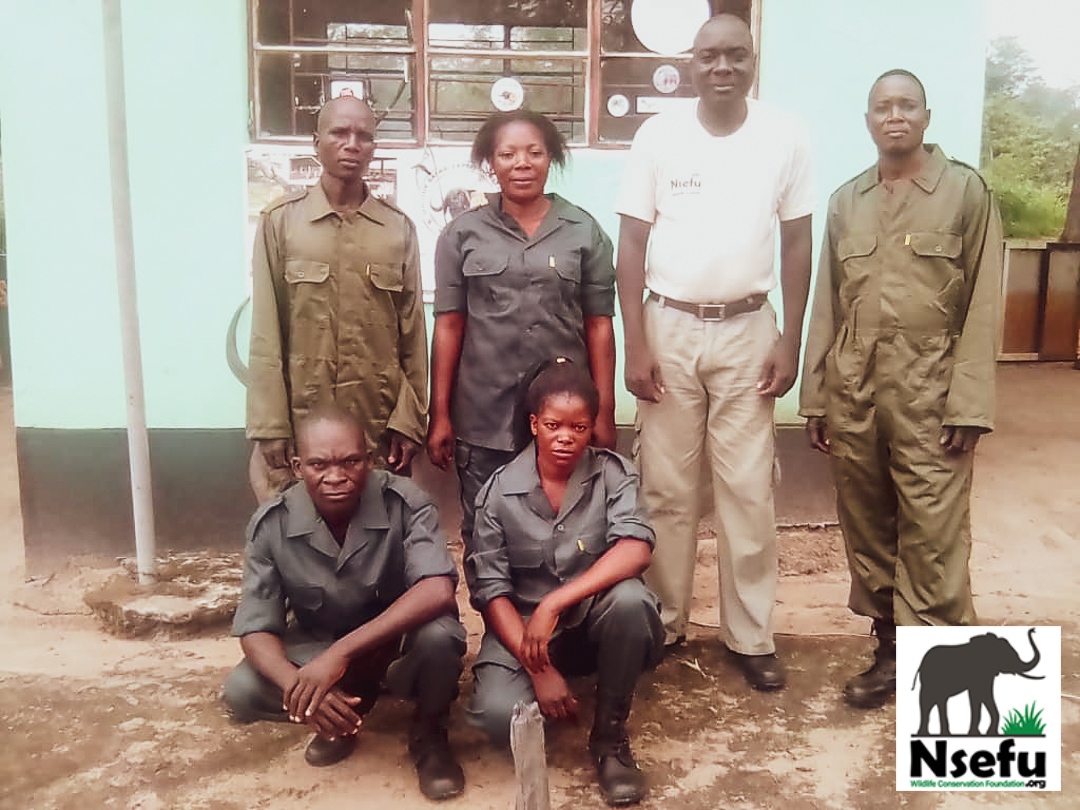
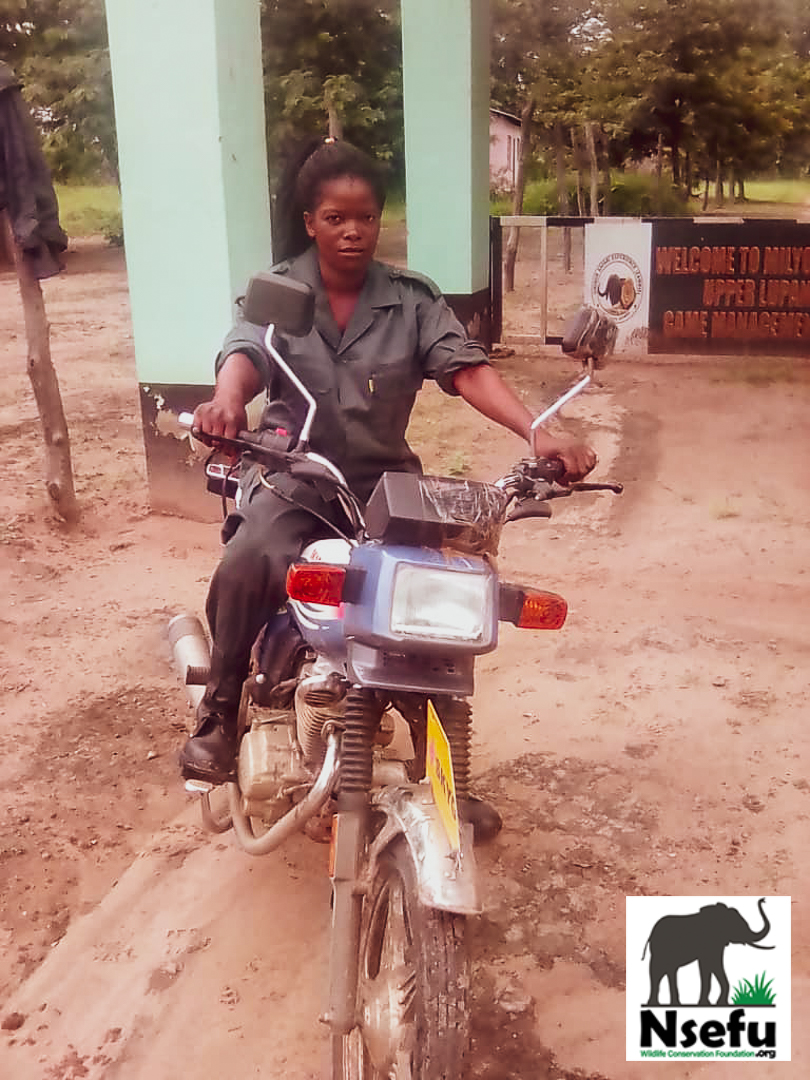
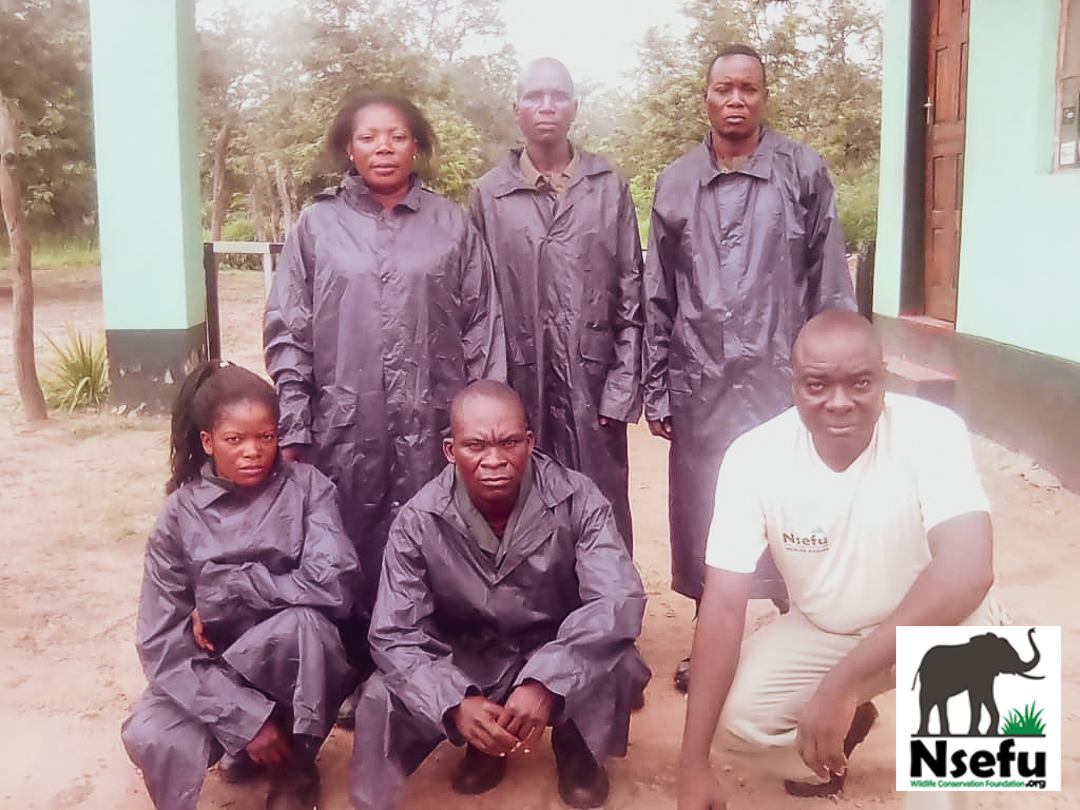
Nsefu Team with new uniforms and rain gear!
With your support, we can stop poaching in its tracks!
The Nsefu team in Zambia just got some new gear, uniforms and rain gear. Your donations make it possible to properly outfit our team members with the gear they need to stop poaching.


Busted! China customs dismantles major ivory trafficking syndicate!
Chinese authorities bust a massive ivory smuggling ring.
Chinese authorities have confirmed the capture and repatriation of Ou, one of the key players in a massive ivory smuggling syndicate based in Shuidong, China
It all started in 2017 when our undercover investigations into ivory smuggling in Mozambique revealed a major Chinese-led crime syndicate operating out of the small Chinese town of Shuidong.
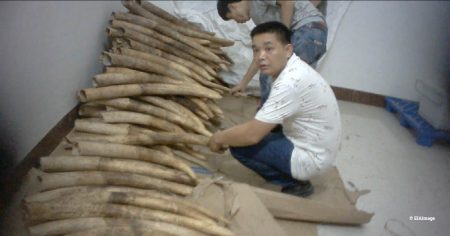
Caught on hidden camera – members of the Shuidong syndicate show undercover EIA investigators their illegal ivory stash
Over the course of more than a year, our investigators infiltrated the syndicate and managed to piece together a detailed view of the shocking scale of these criminal activities as well as uncovering the identity of ivory traffickers occupying key positions.