
CONSERVATION NEWS
Elephants are evolving to be tuskless after decades of poaching pressure
More than half of female elephants are being born without tusks!

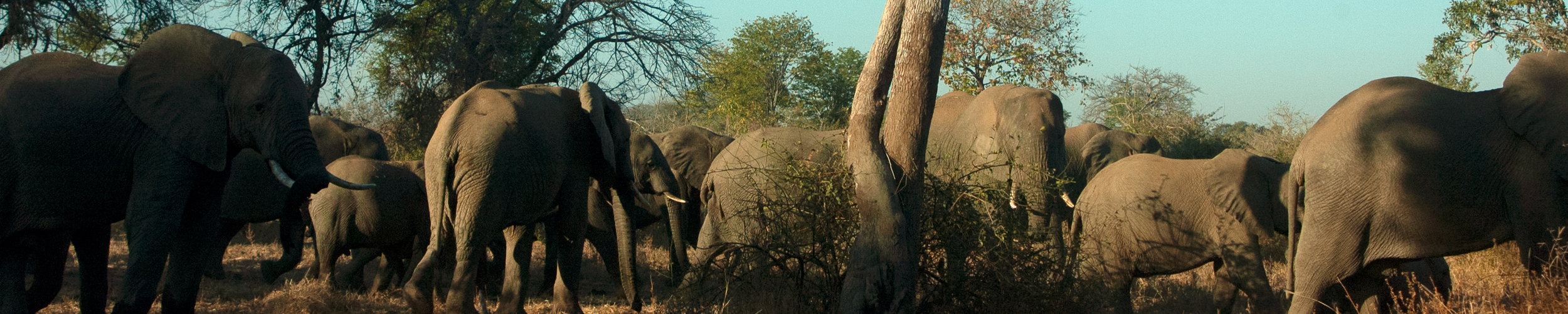
Human-influenced natural selection has resulted in many elephants being born without tusks. (Ryan Long)
Poachers hunting elephant ivory may have met their match in one of nature's greatest forces: natural selection. In at least two national parks in Africa, where poaching has been a huge problem, most female elephants are now born without tusks.
Until the 1990s Gorongosa National Park in Mozambique was home to about 2,500 elephants. But during the civil war that raged from 1972 to 1992, about 90 per cent of that population was killed.
Many of those elephants were slaughtered for their ivory tusks, which were sold to purchase weapons and food to feed the fighters. It now seems that this slaughter was a strong form of evolutionary selection on the elephants, which has increased the frequency of genetic variations that result in tusklessness in female elephants and smaller tusks in males.
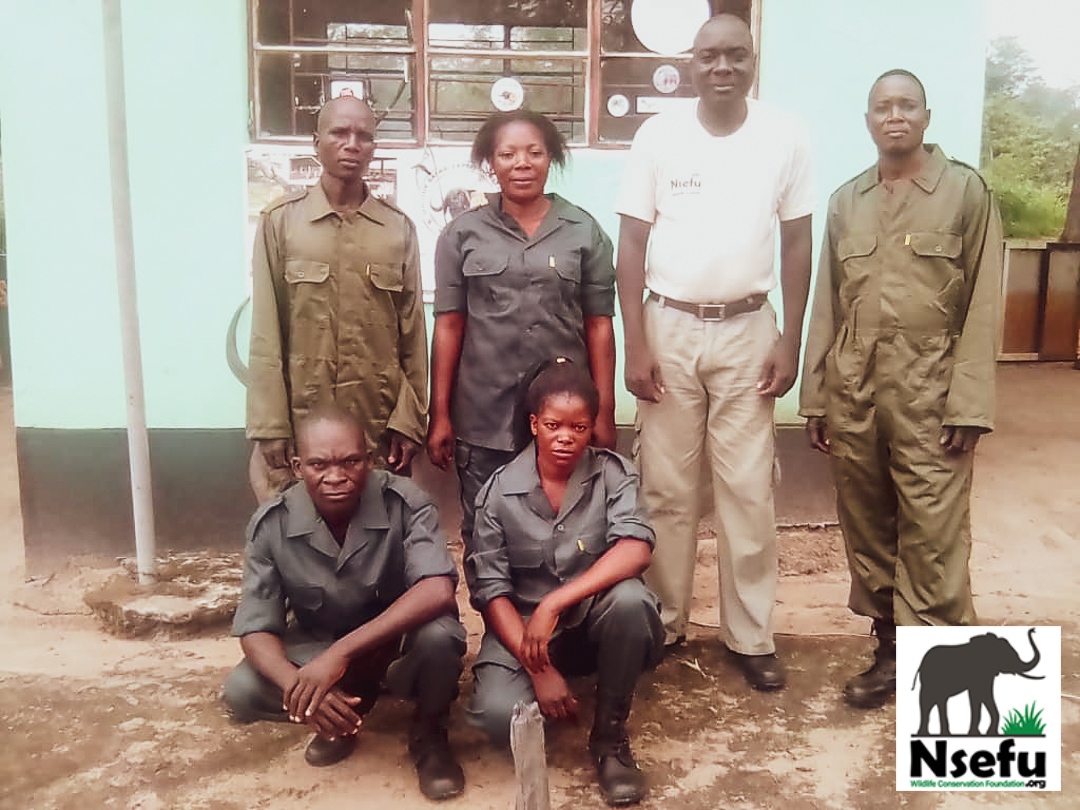
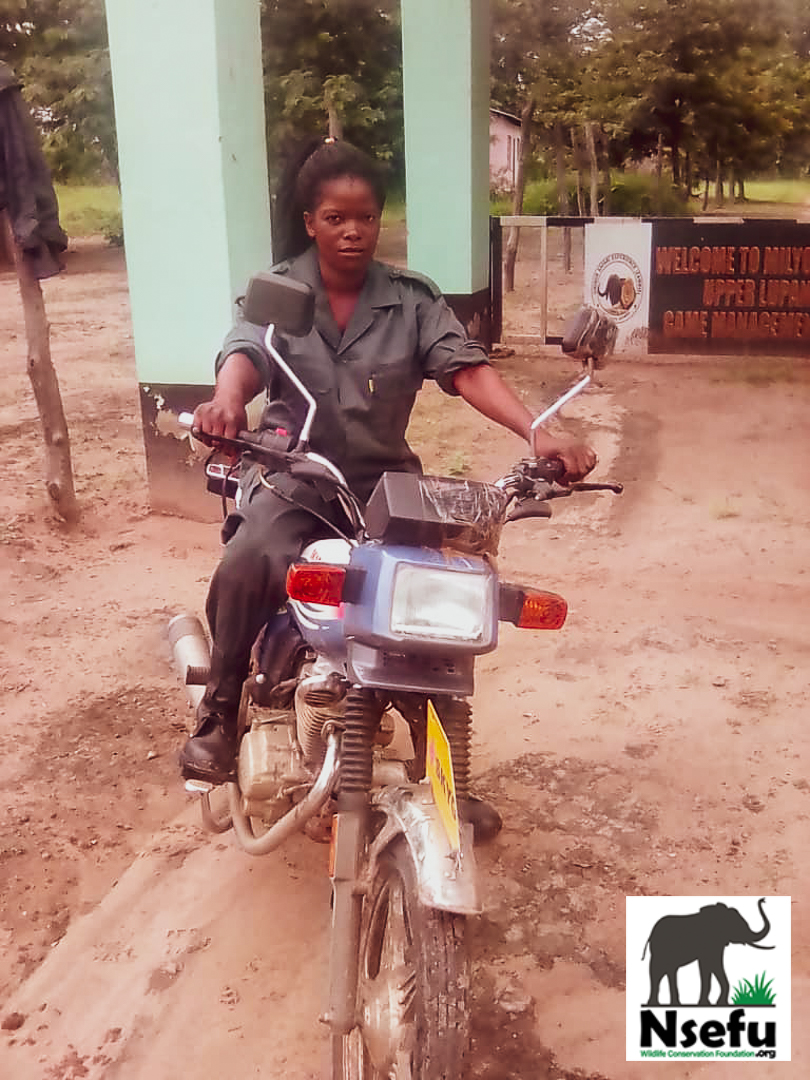
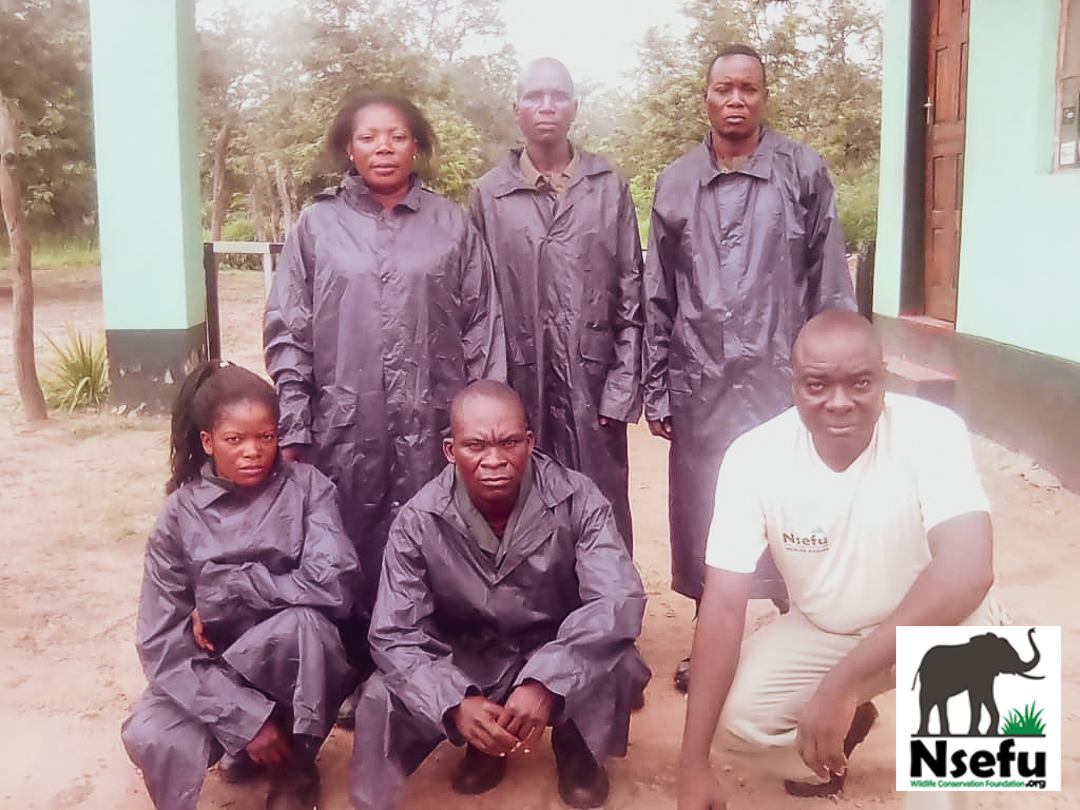
Nsefu Team with new uniforms and rain gear!
With your support, we can stop poaching in its tracks!
The Nsefu team in Zambia just got some new gear, uniforms and rain gear. Your donations make it possible to properly outfit our team members with the gear they need to stop poaching.


Busted! China customs dismantles major ivory trafficking syndicate!
Chinese authorities bust a massive ivory smuggling ring.
Chinese authorities have confirmed the capture and repatriation of Ou, one of the key players in a massive ivory smuggling syndicate based in Shuidong, China
It all started in 2017 when our undercover investigations into ivory smuggling in Mozambique revealed a major Chinese-led crime syndicate operating out of the small Chinese town of Shuidong.
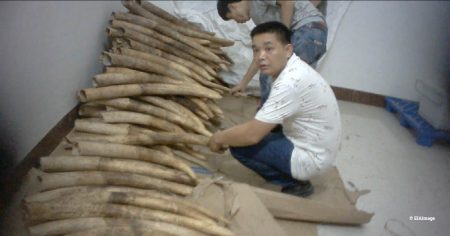
Caught on hidden camera – members of the Shuidong syndicate show undercover EIA investigators their illegal ivory stash
Over the course of more than a year, our investigators infiltrated the syndicate and managed to piece together a detailed view of the shocking scale of these criminal activities as well as uncovering the identity of ivory traffickers occupying key positions.
Wildlife Crime unit busts wildlife meat traders and rescues live turtles!
The Wildlife Crime unit is working hard in Southeast Asia.

With intel on a suspected wildlife meat trader, the Wildlife Rapid Rescue Team (WRRT), accompanied by the Kampong Speu provincial prosecutor and local authorities, went to search the suspect’s house along National Road 4. During the search, the team found 6kg (13.2 lbs) of wild boar meat, 4kg (8.8 lbs) of red muntjac meat, 1.5kg (3.3 lbs) of common palm civet meat, 14 pairs of Malayan sun bear claws, a live yellow-headed temple turtle, a tabagar baska turtle, 5 Asian soft-shell turtles, an elongated turtle, 3 giant Asian pond turtles and a Burmese python. They also found fake elephant ivory and fake rhino horn.
Can the Land of a Million Elephants Survive the Belt and Road?
Chinese-funded projects in Laos could hasten the eradication of the elephant population!
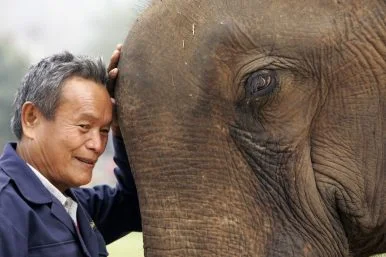
A Laotian elder with an older elephant at the second annual Elephant Festival in Paklay, Laos (Feb. 17, 2008).
Image Credit: AP Photo/David Longstreath
China Railway’s Kunming bureau recently announced that a 36-kilometer long fence will be built along the Singapore-Kunming Railway project to protect wild elephants in southwest Yunnan’s Xishuangbanna region. This is a positive step, but it does little to allay concerns of the railway’s impact on elephant populations along the rest of the 3,900 km (2,400 mile) track of the Pan Asia Railway Central route. This is particularly so in Laos, where total elephant numbers are now below 1,000, and where vehicle collision is only one of many potential threats arising from China’s ambitious Belt and Road Initiative (BRI).
If current trajectories continue there will be no elephants left in Laos by the year 2030. In just 12 years, we could see the complete eradication of elephants from a country that once was known as “the land of a million elephants” (Lan Xang). So how did we reach this crisis point? What are the most daunting challenges for the future? And can Laos’ elephant population survive the advancement of the BRI?
Story by Kearrin Sims and Chrisantha Pinto / www.thediplomat.com.