CONSERVATION NEWS
Beehive fences and elephants: Tanzanian case study offers fresh insights
Looks like one idea for saving elephants with bee’s is catching on!
The Tanzanian efforts are mirroring Nsefu.org's efforts in Zambia.

When people cultivate food crops on or near wild lands it can be assumed that wild animals will eat them – what’s known as crop-raiding. Farms in the vicinity of protected areas can expect to be visited by a range of wild animals including birds, rodents, and large mammals like monkeys, bushpigs and elephants.
Because of their size, elephants are the most conspicuous crop-user and may, in addition to eating crops, trample farmers’ fields and break fences. Using nonlethal ways to deter elephants from farms is the most humane and effective defence long-term. But elephants are still being shot and killed, particularly if they threaten people or property.
Given that elephant numbers are dwindling, creative solutions need to be found to reduce crop losses and improve the chances of elephants and people coexisting.
Over the past eight years we have been trying to do just that. We have been collecting data on elephants – their consumption patterns and their impact on crops at a forested site in southern Tanzania. And we’ve been working with farmers to try and design ways of keeping elephants at bay.
After some failures, we imported an idea from Kenya – beehives. After five years of study we’ve published our results which show that there is indeed merit to installing fences made up with beehives to keep elephants from eating, and destroying, farmers’ crops.
What failed, what worked
One method farmers tried to adopt involved collecting and soaking elephant dung in buckets of water and spreading the fibrous mixture across their fields. The basis of this interesting idea was that elephants are coprophobic – they don’t like their own poo – and will avoid eating crops covered in their own dung.
We were unable to test the effectiveness of this approach because Udzungwa Mountains National Park introduced new rules in 2011 that banned people from collecting firewood as well as non-timber products such as elephant dung from the park.
Farmers then tried chilli-oil. Cloth, soaked in used motor oil and powdered chillies, was then attached to rope fences. But heavy rains in the Udzungwa Mountains meant that the mixture had to be reapplied regularly.
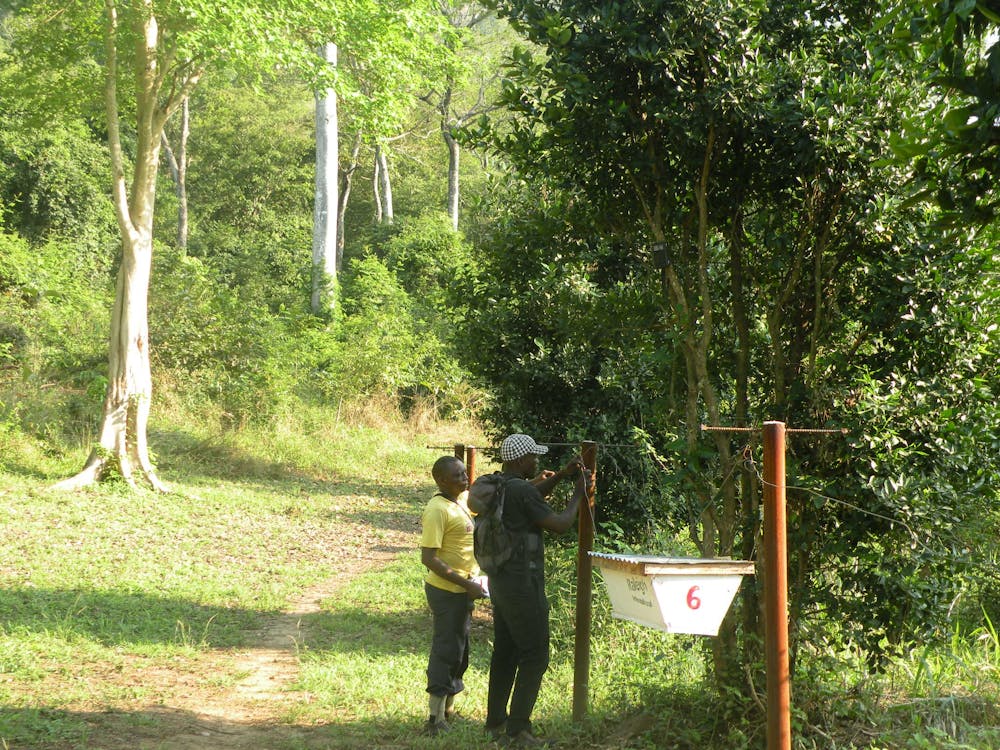
Next we looked to our neighbours for a solution – beehives. These were being used in elephant conservation field programmes in Kenya and the practice was spreading to other African countries and also to Asia.
Using beehives at our site involved installing a fence between the park boundary and farms. The beehives are connected with a wire. When elephants attempt to enter fields they disturb the wire which causes the hives to swing. This in turn disturbs the bees inside the hives. Our initial short 500m fence of 50 hives was eventually extended by 600m and 87 hives four years ago.
Our findings after five years of study show that there’s promise in the approach.
Our findings
Our main finding was that the probability of elephants damaging crops was less with the construction of the short beehive fences, and even lower when the fence was extended.
We also found that as more hives making up the fence were inhabited by bees, the more elephants stayed away.
A few factors affected the success of the beehive fences. These included:
Elephants breaching the fence where hives were empty. Of the 133 fence breaches, nearly 70% were between empty hives.
Not mending damaged fences promptly.
Elephant bulls visiting farms at night, when bees are relatively less active.
The beehive fence didn’t completely eliminate elephants entering farms. But it did reduce the number of elephant visits and was well-received by farmers.
Another indicator of success was that farmers stopped calling game officers to shoot problem elephants. Farmers also formed and registered a cooperative group to manage the beehive fence and honey harvests.
The beehive fence method is spreading
The use of beehive fences is beginning to spread across southern Tanzania. And government has recently advised that beehives be used to deter elephants from crops around the Serengeti, in northern Tanzania.
Next steps should involve standardising how sites employing this method are monitored and evaluated. This could help determine the minimum effective fence length and optimal placement of beehives.
Other lessons could be learnt that might be replicated in new sites. For example, unoccupied – or dummy hives – have been shown to be effective but presumably only if elephants have already developed a negative association with occupied ones.
Finally, researching the differences in the relative nighttime activity of both elephants and honeybees across sites could also help explain differences in outcomes and inform best deterrent approaches and improvements.
Our programme has already pioneered the use of camera traps to monitor elephant activity and identify crop-using individuals in the vicinity of beehive fences. These could be used at other sites too.
Katarzyna Nowak, Fellow at The Safina Center, University of the Free State
This article was originally published on The Conversation. Read the original article.
IN PLANE SIGHT - Wildlife Trafficking Report
Please read this detailed report about animal trafficking.

In Plane Sight examines wildlife trafficking through the air transport sector by analyzing nine years' worth of open source seizure information, and is intended to provide an update on wildlife trafficking activity in airports since last year's Flying Under the Radar. Over the past year, C4ADS analysts have continued to collect ivory, rhino horn, reptile, and bird seizures, and have developed three new datasets covering pangolin, marine products, and mammal seizures.
In general, the report finds wildlife trafficking activity to be truly global in scope, and increasingly so, as trafficking networks continue to seek out new source regions and demand markets for their illicit products. Source: https://c4ads.org/reports
NOTE: Use your UP & DOWN arrow keys to scroll through the report.
Join Nsefu.org for "A Toast for Tusks"
Help Nsefu.org protect the wildlife in Africa!

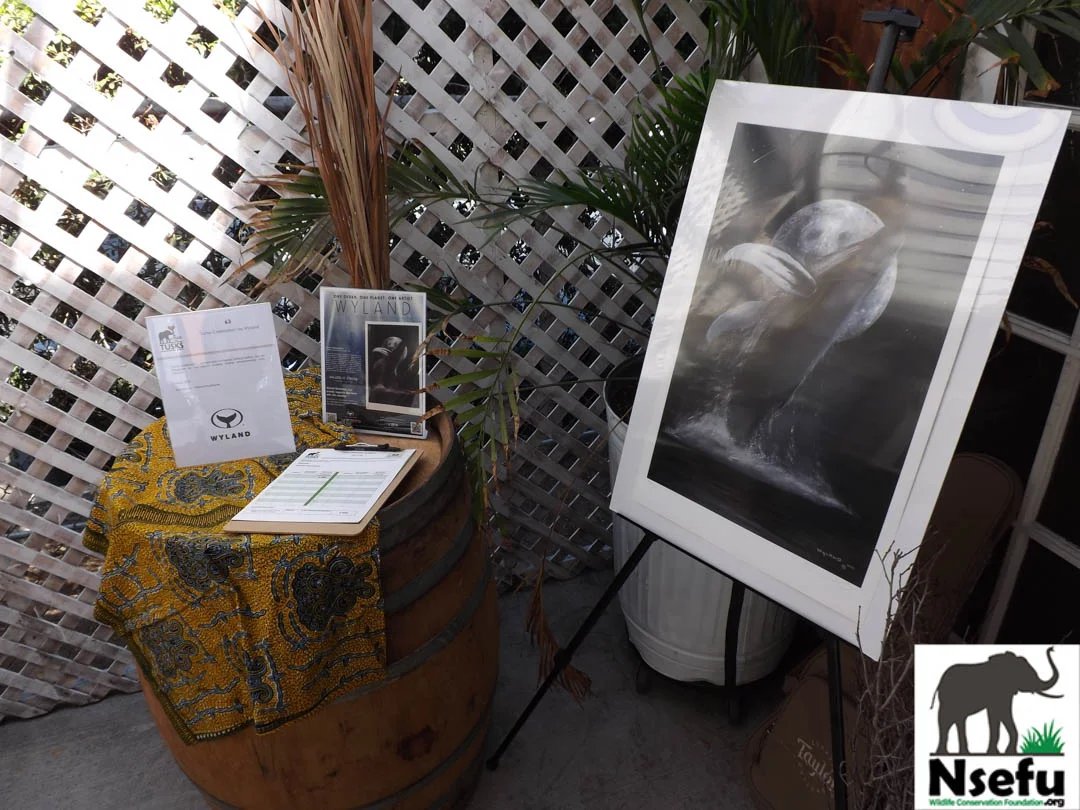
Nsefu Wildlife Conservation Foundation and Witch Creek Winery invite you to "A Toast for Tusks" on Sunday, September 30th from 2-6pm at Witch Creek Winery, Carlsbad, CA.

Friends of Nsefu Wildlife enjoying the festivities.
Witch Creek Winery is proudly helping support Nsefu Wildlife's groundbreaking wildlife-saving programs in Africa. 100 elephants and 6 rhinos die every single day due to rampant poaching fueled by the insatiable black market demand for ivory, rhino horn, lion bones, and more. Not to mention the devastating impact of wildlife trafficking of exotic animals. The numbers for elephants and rhinos number so few, they will literally be wiped from the wild within 8 years and this is simply unacceptable. Nsefu Wildlife is on the ground working 24/7 to protect and preserve wildlife, especially endangered species. You can help fight extinction with us by attending our event "A Toast for Tusks"! All proceeds will be turned into action supporting our Nsefu Wildlife Ranger and Community programs. Nsefu Wildlife IS making a difference and creating change in Zambia with boots-on-the-ground action and education.
Join us for delicious food and award-winning wine tastings including our Wild Wines, featuring the "Save Us" collection. These wines were created by Witch Creek Winery to help support Nsefu Wildlife. There will be excellent silent auctions that include concert tickets and so much more! There will also be an Opportunity Drawings and door prizes. It will be a wonderful afternoon of wine for wildlife. *Must be 21+ for wine tasting.












CMR Risk & Insurance Services, Inc. Donation to Nsefu
Donations go directly to our conservation efforts!
CMR Risk & Insurance Services, Inc. presented Nsefu.org president Coe Lewis with a check in support of our conservation efforts in Zambia.
We at Nsefu.org appreciate the kind donation.

First-ever test tube rhino embryo gives hope for functionally extinct species
There is hope for the future!

Although no living male northern white rhinos remain on Earth, experimental assisted reproduction techniques treatments still offer the functionally extinct species a fighting chance. Scientists are now reporting a promising breakthrough in the battle for their survival, producing first-of-a-kind test tube embryos they claim can offer a high probability of pregnancy in a surrogate mother. Story by Nick Lavars / newatlas.com.